Floating Shades, Firm Foundations: A Practical Check for Tensegrity Lamps
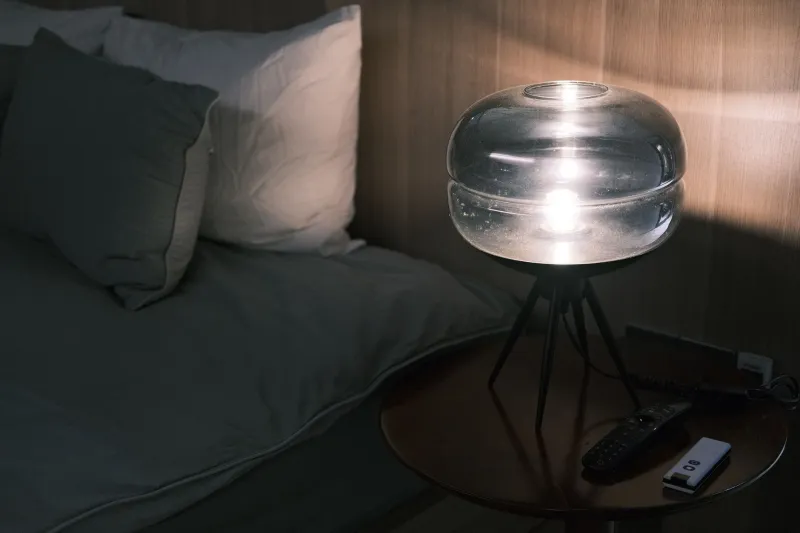
Tensegrity lamps have a neat trick: they make a shade look as if it is hovering above a base with nothing but good intentions. In a British living room, that trick has to survive draughts from sash windows, a curious cat and the occasional nudge from a hoover. The good news is that a well-made tensegrity light can be stable and safe. The less good news is that plenty of lamps sold as 'floating' are ordinary pendants wearing a costume.
First, decide what you mean by tensegrity
A genuine tensegrity structure separates compression from tension. The rigid parts - struts, a base, a frame - push against each other, while a network of cables or cords pulls the whole thing into shape. Nothing should rely on a hidden bracket to do the floating. At lamp scale, that means you should be able to spot the compression members and the tension members as separate jobs. The shade may appear to float, but it is held by a closed system of pulls, not by a single stiff arm painted black.
Decorative cable styling is different. It might use cables to suspend a shade from a frame, or it might hide a rigid rod inside a fabric flex. That can still look good, and it can still be safe, but it is not the same thing. If the only thing between base and shade is a power cable and a hopeful design statement, treat it as decorative rather than structural. That matters when you start thinking about stability, adjustment and repair.
The base is doing the quiet work
A tensegrity lamp is a small balancing act, and the base is usually the reason it stays upright. Look for mass low down and a footprint wide enough to resist a knock. A tall, narrow base with a light shade can look elegant, but it has less margin for error on a narrow hall table. If you have children, pets or a busy route through the room, give yourself more margin rather than less.
Ask the seller for the base weight if it is not listed. A heavy base is not automatically a good design, but a very light base holding a large shade should make you ask questions. When you see the lamp in person, give it a gentle nudge - not a shove - and watch how it settles. A small, damped wobble is normal. A slow lean that keeps going is not. If the lamp creeps out of level after a day on a shelf, the tension system or the base is not doing its job.
Cables you can tune, not twang
Good tensegrity lighting usually gives you a way to adjust cable tension. Turnbuckles, threaded terminals or small tensioners are a sign that the maker expects the cables to be set up and maintained. Steel cable with proper ferrules is common in better designs; synthetic cord can work too, but it may stretch or creep over time. Either way, the cables should feel firm and even, not slack on one side and guitar-string tight on the other.
Check the terminations. Sharp bends, crushed ferrules and cables rubbing against a metal edge are all future failures. If the lamp arrives with slack cables and no instructions for tensioning, that is a warning sign. A tensegrity lamp is not a fit-and-forget object in the same way as a table lamp with a solid stem. It may need a tweak after transport, and it may need another tweak after a few weeks in a warm room.
Heat, shade and the British bulb
Most modern lamps are designed around LED bulbs, which is good news for heat. But check the maximum wattage and the lamp holder rating rather than assuming. A shade that sits close to the bulb needs clearance and a material that can cope with warmth. Fabric, paper and thin plastics can all be fine when paired with a low-heat LED, but they are less forgiving if someone fits an old high-wattage bulb from the cupboard under the stairs.
Look for a clear maximum wattage in the instructions and stick to it. If the seller says 'any bulb' without giving a limit, ask. Also check that the electrical flex cannot touch the hot part of the bulb or the lamp holder. Cables under tension and cables near heat are two different risks, and a good design keeps them apart.
Wiring and the plug: the unglamorous bit
This is where a beautiful lamp can fall down. For a UK buyer, the plug should be a proper BS 1363 plug, moulded or rewirable, with the correct fuse for the light. A 3 A fuse is typical for lighting, but follow the maker's instructions. Look for UKCA marking where required, and read the paperwork. A CE mark alone is not a substitute for a UK-compliant plug, and a loose travel adapter is not a solution.
Check the cord grip at the plug and at the lamp. The flex should not be taking the strain of the structure. In a tensegrity lamp, the electrical cable should ideally be separate from the load-bearing tension members. If the maker uses the power flex as a structural cable, they need to show that it is designed and rated for both jobs. That is rare in cheap lighting, so be sceptical.
If you are buying online from overseas, factor in the plug and the instructions. A lamp that arrives with a two-pin plug and a loose adapter is not ready for a British home. A reputable seller will either supply a UK plug or make the requirement clear. If the wiring looks thin, the plug feels loose or the instructions are missing, walk away.
Try before you trust, or buy with a return window
In a shop, ask to see the lamp switched on and give it a gentle stability check. Listen for creaks or cable rubbing. Look along the cables to see whether the tension is even. Online, check the return policy and the dimensions. A lamp that looks delicate in a photo may be much larger than your side table can take, and a tensegrity frame that is stable on a wide plinth may feel less so on a narrow shelf.
A short checklist helps: base weight and footprint, adjustable cable tension, clean terminations, LED-friendly heat limits, separate electrical flex, BS 1363 plug, correct fuse, UKCA marking where required, and clear instructions. If the seller cannot answer basic questions about mass and cable material, that is useful information too.
Tensegrity lighting is a lovely way to bring a bit of structural drama into a room. The trick is to buy the engineering, not just the float. A lamp that leans slightly by design can be charming. A lamp that leans because nobody thought about the base is just a wobble waiting to happen.