When a Tensegrity Frame Goes Soft: A Repair-Café Field Guide
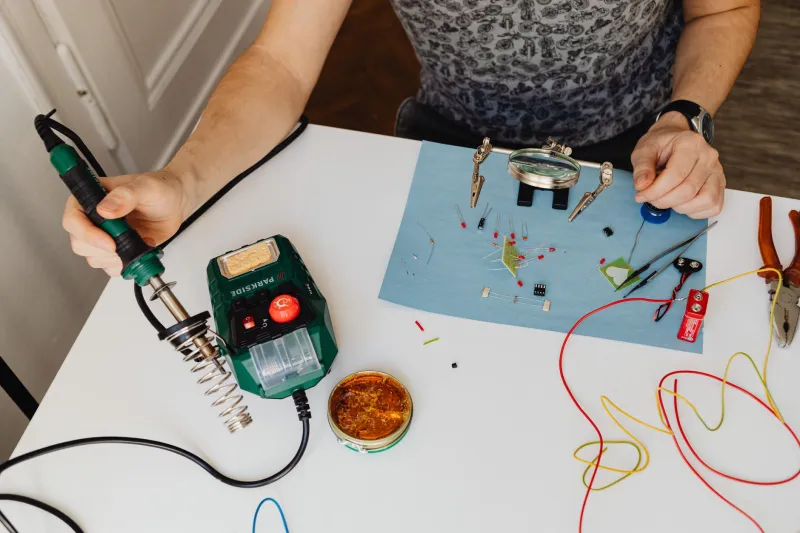
On a damp Saturday in a church hall somewhere in the UK, a queue forms: a kettle, a lamp, a radio, a child’s toy. Then someone arrives with a small tensegrity table. It still stands, sort of, but one corner droops and a cable looks limp. The volunteer reaches for a spanner and finds… nothing obvious to tighten. That moment sums up both the promise and the puzzle of tensioned structures. They seem to have no joints, no bolts, no obvious maintenance points. In practice, they have plenty — they are just distributed across cables, connectors, struts and anchors.
Where the tension actually goes
A tensegrity frame works because continuous tension holds discontinuous compression in place. The cables are not decoration; they are the structure’s nervous system. When one goes slack, the whole arrangement can lose its shape. The usual suspects are unglamorous: cable creep, stretched elastomer, slipped terminations, worn shackles, compressed timber, dented aluminium tube, loosened grub screws, or a base that has settled on an uneven floor.
Wood is a particular culprit in UK homes. A tabletop that was tensioned in a dry January workshop may behave differently after a humid summer. Timber swells and shrinks, and a frame that was once crisp can start to lean. Metal expands and contracts too, though usually less dramatically. Elastomer bands — popular in tabletop models — age, crack and lose elasticity. None of this means the design is bad. It means the structure is doing what physical things do: changing over time.
Preload is not one magic number
People often talk about ‘tightening’ a tensegrity frame as if there were a single correct setting. There is not. What matters is the pattern of preload across the system. Over-tension one cable and you may distort a strut, crush a timber bearing surface or overload a fitting. Leave another too slack and the frame will wobble or rack out of shape. The aim is balance, not brute force.
A useful starting point is to stop and look. Photograph the frame from two angles before you touch anything. Mark datum points with low-tack tape. Measure diagonals and compare them with the maker’s drawings if you have them. Gently pluck cables to compare tone — not scientifically, but as a quick check for obvious slack. Listen for rattles. Watch for struts that sit at odd angles. A tensegrity frame that has ‘gone soft’ is usually telling you which part of the load path has changed.
A repair-café checklist
Before any repair, unload the structure and, where possible, isolate it from people and pets. Never put your face close to a cable under tension, and wear eye protection when working with wire, swages or springy bands. If the frame is large, suspended or load-bearing, stop: this is not a kitchen-table job.
For a small domestic model or furniture piece, work through this sequence:
- Document first. Photograph the whole frame, then each connection. Label cables with tape if you are removing more than one.
- Check the terminations. Look for frayed wire, slipped knots, cracked swages, bent hooks and worn thimbles. A termination that has crept is a common cause of sudden slack.
- Inspect the struts. Roll them on a flat surface to check for bends. Look for crushed ends, split timber and loose inserts.
- Check the anchors and bearings. A cable may be fine while the point it pulls against has worn or compressed.
- Measure the geometry. Compare diagonals and heights. If the frame is skew, do not simply crank every cable tighter.
- Replace one element at a time. Change a cable, then re-check. Change a fitting, then re-check. Batch repairs make diagnosis harder.
- Re-tension gradually. Bring the frame back into shape in small steps, working around the structure rather than maxing out one cable.
- Record what you did. A note or photo of the final settings helps the next repairer — perhaps future you.
What a repair café can realistically fix
Quite a lot, if expectations are honest. Replacing a simple cable, fitting a new shackle, adding a protective thimble, repairing a timber bearing plate or swapping a perished elastomer band are all within reach of a well-equipped repair café. So is re-setting a small tabletop frame that has drifted out of alignment.
More ambitious work is different. Swaging stainless cable needs the right tool and a bit of practice. Structural cables on public sculptures, bridges or anything that carries people are not repair-café territory. Nor should a volunteer improvise a load-bearing connection on a frame designed by someone else. The line is not about whether it looks simple; it is about consequences if it fails.
Proprietary fittings are the quiet enemy of repair. A frame held together with standard shackles, bolts and cable clamps is far easier to keep alive than one with hidden glued terminations and bespoke connectors. Repairability is a design decision made long before the repair café sees the object.
Designing for the second Saturday
For makers, the repair-café test is a useful design brief. Can a competent volunteer reach the tensioner? Are the cables standard sizes? Is there a drawing that shows the intended geometry? Are spare parts available, or at least specified? Can the frame be unloaded safely without cutting anything? These questions do not make a structure less elegant. They make it more likely to survive.
The Repair Café idea, which began in the Netherlands in 2009, has spread widely across the UK, often through libraries, community halls and maker spaces. In 2026, that network feels like a natural home for small tensegrity objects that have lost their spring. The skills needed are not exotic: patience, basic hand tools, a little geometry, and the confidence to work slowly. The reward is a frame that can be understood, adjusted and kept standing rather than quietly binned.
A tensegrity structure will never be maintenance-free. Cables slacken, timber moves, fittings wear. But that is not a flaw unique to tensegrity; it is the condition of all physical things. The question is whether the object gives you a fair chance to intervene. When it does, the repair café is exactly the right place to take up the slack.