Who Gets the Credit? Tensegrity's Patent Arguments and the Modern Maker's Dilemma
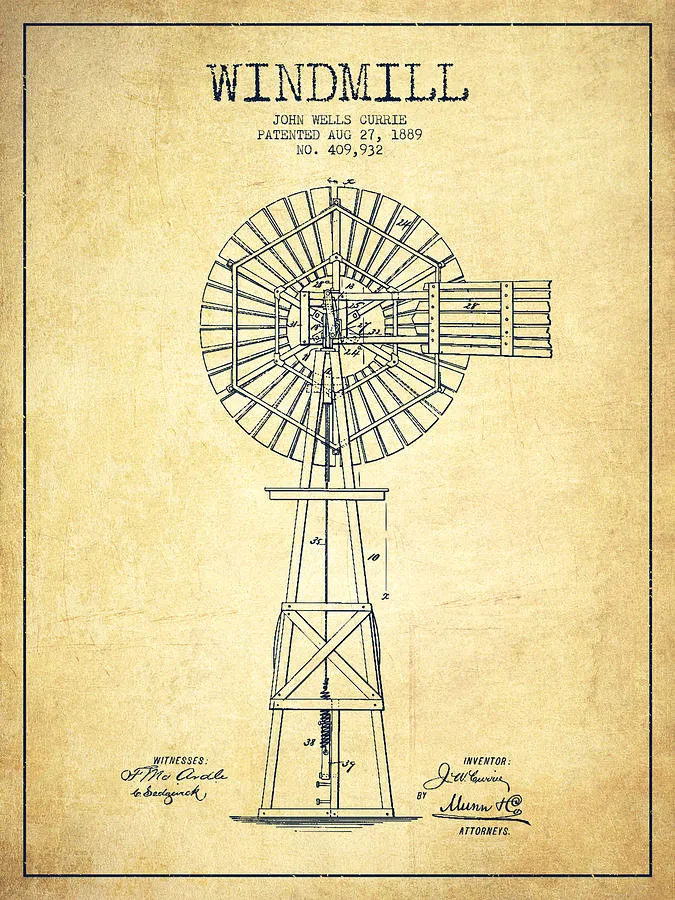
Photo: John Mills Currie, Public domain, via Wikimedia Commons
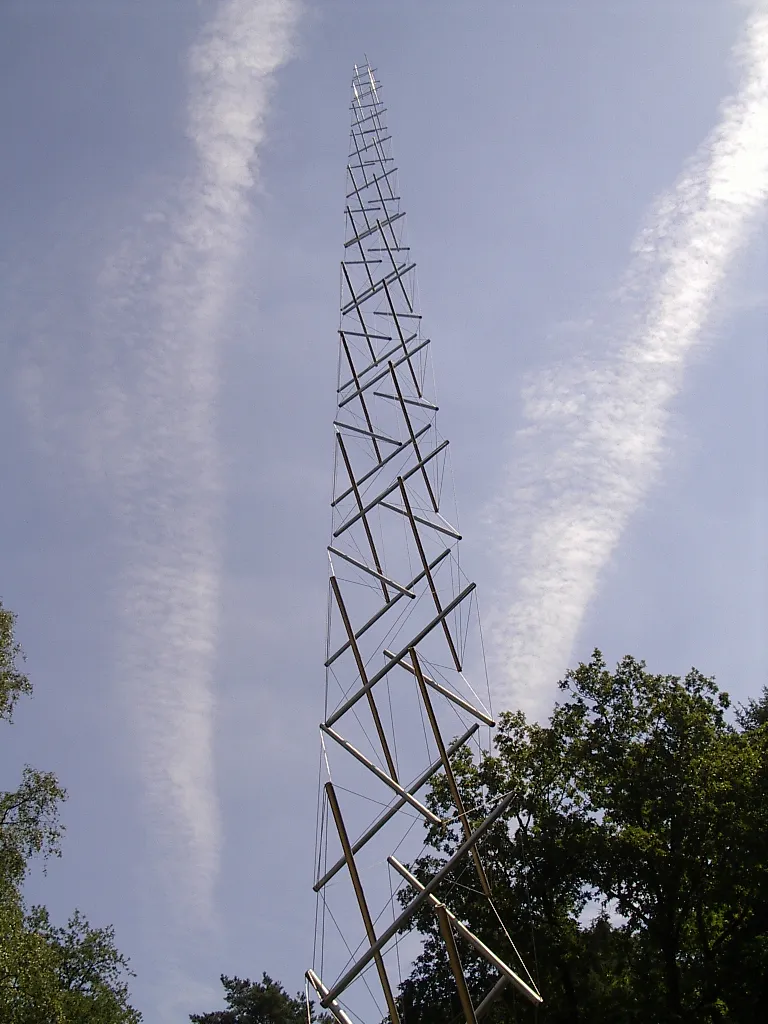
In the summer of 1948, a young artist named Kenneth Snelson built a small structure at Black Mountain College in North Carolina. It had rods that did not touch, held apart by a web of tension. He showed it to Buckminster Fuller. Fuller saw something bigger than a clever model. He saw a principle, and he gave it a name: tensegrity. The word stuck. The credit question did not settle quite so neatly.
A model, a name, a quarrel
Snelson had his own description: continuous tension, discontinuous compression. It was accurate, if less catchy. Fuller's term, shortened from 'tensional integrity', travelled further and faster. Soon tensegrity was appearing in architecture lectures, engineering textbooks and, eventually, maker tutorials on YouTube. Snelson spent decades pointing out that the idea had a maker as well as a name. The disagreement was not just about ego. It was about authorship, attribution and who gets to define a field.
This is a familiar pattern in design history. A term becomes generic, the origin story simplifies, and the person who built the first model becomes a footnote. Fuller was a brilliant populariser, and Snelson was a meticulous artist-engineer. Both facts can be true. The quarrel is part of the history, not an embarrassing glitch to edit out.
Patents, prestige and 'patent pending'
Patents added another layer. Fuller filed patents for tensile-integrity structures in the United States, and Snelson pursued his own intellectual property around related ideas. The details are tangled enough to keep lawyers busy, but the lesson for makers is simple: tensegrity has never been a pure commons. It has always involved ownership claims, licensing questions and arguments about what counts as an invention versus an artistic arrangement.
In the UK, the Intellectual Property Office handles patents and registered designs. Patents protect inventions and can be expensive. Registered designs protect the appearance of a product. Unregistered design right arises automatically for certain original designs and can protect shape and configuration for a limited period. Copyright may also apply to drawings, models and artistic works. None of this is a single tidy rule. A tensegrity lamp, for example, might involve design right in its shape, copyright in its drawings and perhaps a patent if it contains a genuinely new mechanism.
That is why the phrase 'patent pending' deserves respect and suspicion in equal measure. It can signal a real application. It can also be used loosely. If you see it on a maker's listing, treat it as a claim to check rather than a guarantee. If you use it on your own work, be accurate. In the UK, misleading claims about patent status can cause trouble, and the maker community has a long memory.
The maker scene's awkward inheritance
Today's tensegrity makers inherit a world of open tutorials, cheap 3D printers and social media algorithms that reward a striking build. A maker in Bristol posts a tensegrity lamp. A student in Glasgow downloads a parametric model. A workshop in Manchester teaches a tabletop sculpture. The chain of inspiration is real, but it is often invisible. The label says nothing about Snelson, Fuller or the long argument between them.
That invisibility is not always malicious. Maker culture runs on remixing, and attribution can be clumsy. But it matters. Attribution is how a design culture remembers its sources. It is also how reputations are built. If you are a student hoping to work in product design, a well-labelled project that credits its influences looks more professional than one that pretends to have invented tension from scratch.
In the UK, moral rights give authors the right to be identified, but that right generally has to be asserted. In practice, that means saying clearly: this is my drawing, this is my model, this is my adaptation. It is not about being precious. It is about being legible. A shared design culture works better when people know who did what.
What today's builders can do
Start by documenting your process. Keep dated photographs, sketches and notes. If you collaborate, agree credit early, before the project gets exciting. Decide whether you are sharing a design, selling a product or teaching a technique, because those are different situations. Use a licence that fits: Creative Commons for open sharing, a written agreement for commercial work, or a registered design if the appearance of a product is the valuable part.
Then label honestly. 'Inspired by tensegrity principles' is a fair description. 'Invented by me' is a claim that needs evidence. Search the IPO database before you assume an idea is unclaimed. It is not a glamorous afternoon, but it is cheaper than discovering a conflict later. And if you teach tensegrity, teach the quarrel. Tell students that the word came from Fuller, the first model came from Snelson, and the patents came with arguments. That history is not a distraction from the engineering. It is part of how the engineering became a culture.
Credit is part of the structure
A tensegrity model holds because every part knows what it is doing. A design culture holds because people know who did what. The next time you build a tensegrity shelf, lamp or workshop model, look at the label. Does it tell the truth about where the idea came from? Does it name the people who helped? Does it make a claim it cannot support? The answers will not change the physics. They will change the kind of maker scene we build around it.