Floating Platforms, Fixed Rules: Could Tensegrity Play Pass the EN 1176 Test?
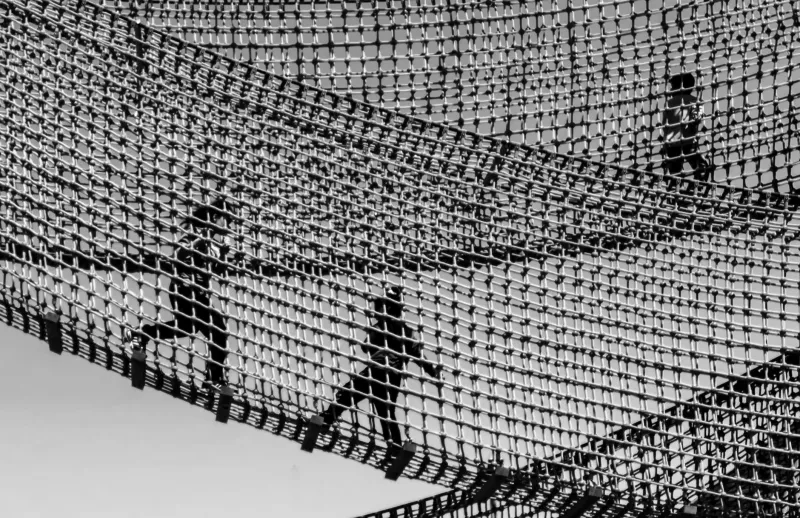
Playgrounds are one of the few bits of public realm where being slightly wobbly is a feature, not a fault. A tensegrity play piece—platforms held apart by struts and drawn together by cables—promises exactly that: a fort that answers back when you step on it. But the same qualities that make it charming to children can make it headache-inducing for inspectors. In 2026, the question for UK makers is not whether a floating deck looks lovely. It is whether it can be shown to meet the expectations of EN 1176, the playground equipment standard that parks departments, insurers and manufacturers still treat as the working benchmark.
Why tensegrity tempts play designers
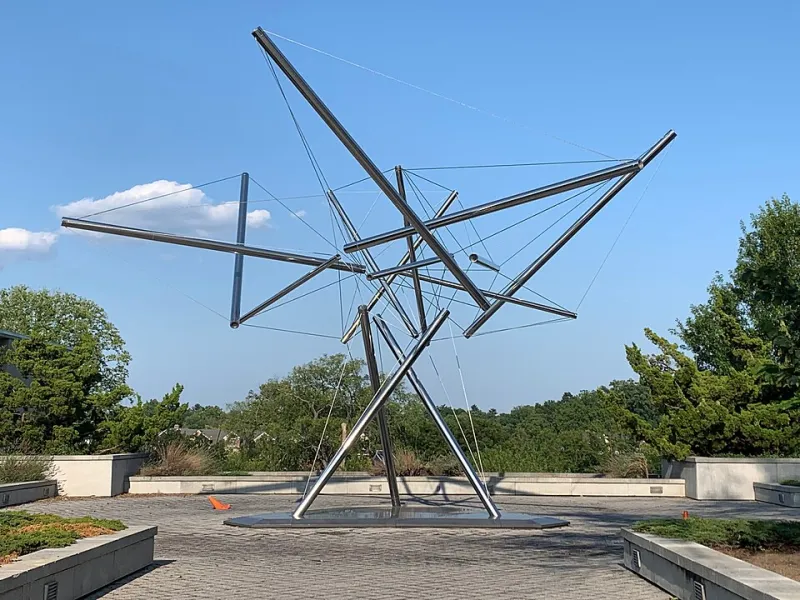
A conventional climbing frame is a lesson in certainty. Posts are fixed, decks are rigid and the structure tells you what it will do. Tensegrity does something more interesting. Cables take the pull, struts push back, and the whole thing finds a shape through tension. For play, that can mean gentle movement, a sense of suspension and a structure that rewards balance rather than brute force.
It also looks different. In a crowded playground, a tensegrity tower or suspended nest stands out. That matters to landscape architects and parks teams looking for memorable public realm. But visual distinctiveness is not a safety case. The moment a child steps on a moving platform, the design has to answer questions that a static sculpture never faces.
The EN 1176 question
EN 1176 is not one document but a suite. Its general safety requirements cover things like entrapment, sharp edges, structural integrity and fall protection. Other parts deal with specific equipment types, and EN 1176-7 gives guidance on installation, inspection, maintenance and operation. EN 1177 covers impact-attenuating surfacing. Together, they form the language that UK playground procurement tends to speak.
They are not a magic legal stamp. The Health and Safety at Work etc. Act 1974 and occupiers' liability duties sit underneath. The standard is a benchmark used in risk assessments, insurance discussions and tender documents. A risk-benefit approach also matters: playgrounds are meant to offer challenge, not eliminate every bump. But challenge has to be designed, documented and maintained, not left to chance.
For a tensegrity play piece, that means proving behaviour under load, misuse and wear. A static calculation is not enough. Cables stretch, terminations settle and platforms move. The safety file needs to show what happens when several children pile on one side, when a cable is slack, when a fitting is worn, and when the structure is asked to do something the designer did not intend.
Entrapment is a moving target
Entrapment is one of the first places a tensegrity design will be tested. Gaps between cables, platforms and struts can change as the structure flexes. A space that looks comfortably large in the workshop may close up when a deck is loaded. A finger trap may only appear at one extreme of movement.
Inspectors will look at head, neck, finger and clothing entrapment. Cable terminations, turnbuckles, anchor plates and the spaces around moving joints all deserve attention. The awkward part is that a tensegrity frame does not have a single resting geometry. The assessment has to consider the loaded and unloaded states, and the range of movement the equipment allows. If a gap can open and close, the designer needs to know whether it can catch a hood, a cord, a limb or a small hand.
Good detailing helps. Cable clamps should be shielded where possible. Tensioning hardware should be out of reach or locked. Openings should be checked at the extremes, not just in the tidy centre of the design.
Fall zones and the moving edge
Fall zones are another practical hurdle. A suspended platform may move sideways or tilt when a child steps off. That movement can extend the area where a fall is possible, and it can bring the user closer to fixed equipment than the plan suggests. The free height of fall needs to be established honestly, not from the height of a drawing.
Surfacing is part of the same conversation. Impact-attenuating surfacing has to match the critical fall height, and it has to stay in place. Loose fill can migrate. Wet weather changes things. A tensegrity piece that encourages jumping between moving decks needs a generous, well-drained fall zone and a clear separation from benches, fences and other play items.
There is also the question of collisions. Two moving platforms that look separated in a static render may meet under load. A cable that swings might intrude into a neighbouring play area. These are not reasons to avoid tensegrity play, but they are reasons to test the full assembly, not just the pretty centrepiece.
Inspection, access and the honest maintenance burden
Play equipment is judged over time. A tensegrity frame introduces maintenance tasks that a welded steel climber does not have. Cable tension needs checking. Terminations need inspecting for wear and corrosion. Turnbuckles need locking. UV degradation, rainwater pooling and vandalism all need a place in the routine.
A practical inspection regime will usually include regular visual checks, periodic operational checks and an annual inspection by a competent person. The details depend on use and risk, but the principle is simple: someone must be able to see the critical parts without dismantling the structure. If a cable anchor is buried behind a panel, or a tensioner needs a specialist tool and a scaffold, the design has failed the maintenance test.
Repair access matters just as much. Can a worn cable be replaced without taking the whole playground out of service? Are spare parts available? Is there a documented cable specification and a safe tensioning procedure? Parks departments will ask these questions because they are the ones holding the logbook when something goes wrong. Insurers will ask too. Public liability cover is not a substitute for evidence; it sits alongside a credible inspection and maintenance record.
A maker's checklist before the first concrete pour
- Check the current EN 1176 suite and EN 1177 with a competent playground inspector, not just an engineer used to buildings.
- Model the structure under realistic child loads, misuse and cable slackness, and document the range of movement.
- Test entrapment gaps in loaded and unloaded states, including terminations, turnbuckles and moving joints.
- Establish the free height of fall from the moving geometry, then design the fall zone and surfacing around it.
- Keep tensioning hardware lockable, shielded or out of reach, and make every critical cable visible for inspection.
- Design for cable replacement and tension checks without dismantling the whole frame.
- Write a maintenance schedule with visual, operational and annual inspection tasks, and a clear logbook.
- Ask an insurer and a parks department to review the safety file before fabrication, not after installation.
Tensegrity play is not automatically riskier than a conventional climbing frame. But it is less forgiving of vague thinking. The structure's charm comes from movement, and movement is exactly what the safety case has to pin down. Done properly, a floating playground could be a genuine public-realm landmark. Done casually, it is a maintenance problem with a nice silhouette.